Stop the cut in our Coastal Douglas‑Fir Forests
Thursday, November 17, 2011
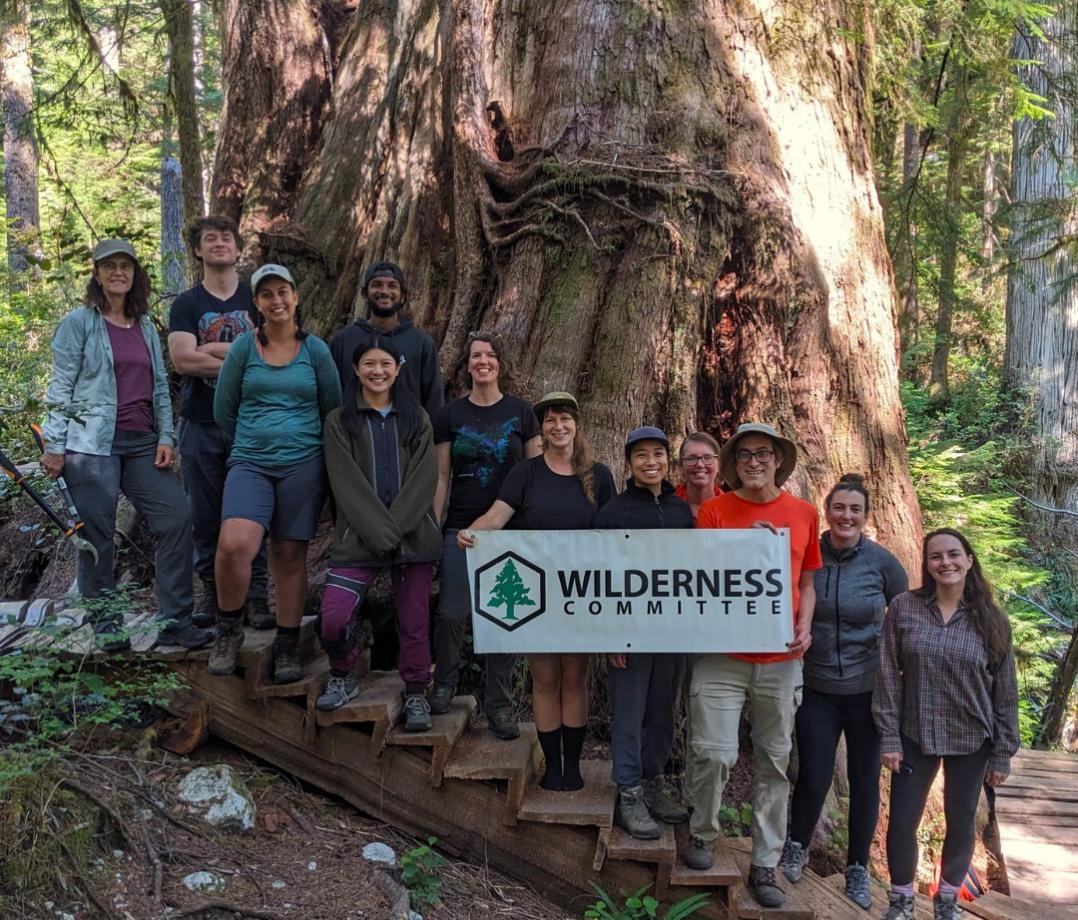
For a handful of Wilderness Committee staff and volunteers, 8:00am on a holiday morning is not too early to stand up for Vancouver Island’s old growth forests.
That’s how early we met up to head off to check out the Nanoose Bay Forest, also known as DL 33, located about half way up Vancouver Island. On Wednesday, November 8, we received word that logging had begun on this rare piece of Coastal Douglas-fir (CDF) forest that just happens to be on Crown land.
The Nanoose Bay Forest, also known as DL33, is a 64-hectare forest that has been at the heart of a two year campaign to save some of the last old growth Coastal Douglas-fir found anywhere in the world. The 256,800 hectare Coastal Douglas-fir ecosystem is only found on the east of Vancouver Island and in small pockets of the Lower Mainland and Washington State.
The CDF has the greatest density of species in BC of provincial and global concern, has experienced the highest level of ecosystem conversion to human development (49 percent), and almost all of its forests have been logged since European contact, with only about 1 per cent remaining as old growth (Forest Practices Board, “Conservation of Imperiled Coastal Douglas Fir Ecosystem,” June 2010).
Most of the CDF on Vancouver Island is on privately owned lands, but DL 33 is unique because it sits on Crown land, making it one of the few pieces of land where it’s easier for government to actually protect. Sadly this trip wasn’t to go check out the red listed species, or to look at the towering Grand Firs. This trip was to check out the damage done by chainsaws that had started cutting only two days prior.
When we arrived we were greeted by the locals who had heard the first veteran tree fall. There are about 100 veteran, or old-growth, trees left in this forest. As our guides took us out into the forest, we passed the riparian zones that drain out to local salmon bearing streams. The combination of mature and old growth surrounding these wetlands is another aspect of what makes the forest particularly ecologically valuable, providing unique niches for plants and animals to survive.
A short distance from the riparian zone we found the first cut. The company has stated that they are not cutting any of the old growth, something the giants lying on the ground would likely dispute. Our guides took us further in to the forest where we found Cedars and Douglas firs trees over 200 years old that had been cut down. The largest stump measured well over 6 feet across.
For now, local activists have prevented the damage from becoming too extensive, but it’s only a matter of time before it is gone.
The time for the BC government to take action is now and we need your help.
Thank you for taking action
Tria Donaldson | Pacific Coast Campaigner
Wilderness Committee